
What is Climate Action Planning?
Greenhouse gases are gases that are released through the burning of fossil fuels, the production of methane, and other natural processes. These gases act like a blanket over the earth, trapping heat from escaping our atmosphere and causing climates to change across the world. A changing climate can cause dramatic changes in temperature, weather patterns, and rain and snowfall. These changes can sometimes be catastrophic to a world that is not built to withstand them. Climate action is required to reduce the heating of the atmosphere through the release of these gases (in other words, emissions). Actions can be small in scope - driving your gas powered vehicle less - or require large, expensive actions like utility companies switching to renewable energy.
Governments can aid in climate action by identifying activities that occur within their jurisdictions, and providing suggestions and solutions for change that would benefit industries and residents the most as well as helping to lessen harm to the environment locally and across the globe. However, communities do not necessarily have to complete climate plans to be partaking in climate action - climate action can be found in any action that lessens the burning of fossil fuels or release of greenhouse gases, in actions that make communities more resilient to bad weather, or in actions that support the health and well being of the environment at large.
For more information about the impacts of climate change on Wisconsin, we recommend looking at the
Wisconsin Initiative on Climate Change Impacts' website and the
Wisconsin Department of Natural Resources' Climate Change page.
State Planning
Wisconsin's Emissions Reduction Roadmap
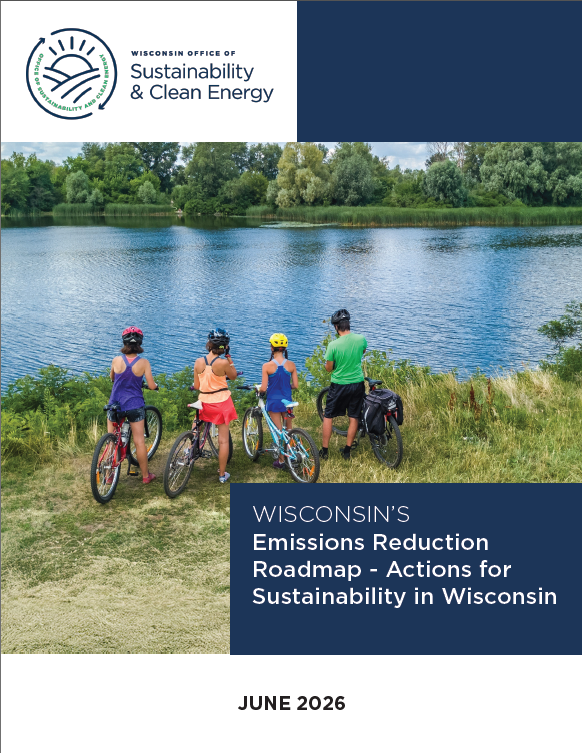
In 2024, the Office of Sustainability and Clean Energy began working on the state's first ever comprehensive climate action plan and it was finally published in June of 2026. The plan was built off of other state planning outlined below, in addition to recommendations and input provided by the public and other state agencies. This plan looks at activities occurring within the state of Wisconsin and identifies ways that residents, visitors, business owners, non-profits, local governments, and more can reduce greenhouse gas emissions and improve Wisconsin's future.
Click here to read "Wisconsin's Emissions Reduction Roadmap: Actions for Sustainability in Wisconsin".
Many analyses were completed to support the development of the Roadmap. You can find links to these analyses next.
This plan was funded through the U.S. Environmental Protection Agency's
Climate Pollution Reduction Grant planning program.
 Wisconsin's Clean Energy Plan
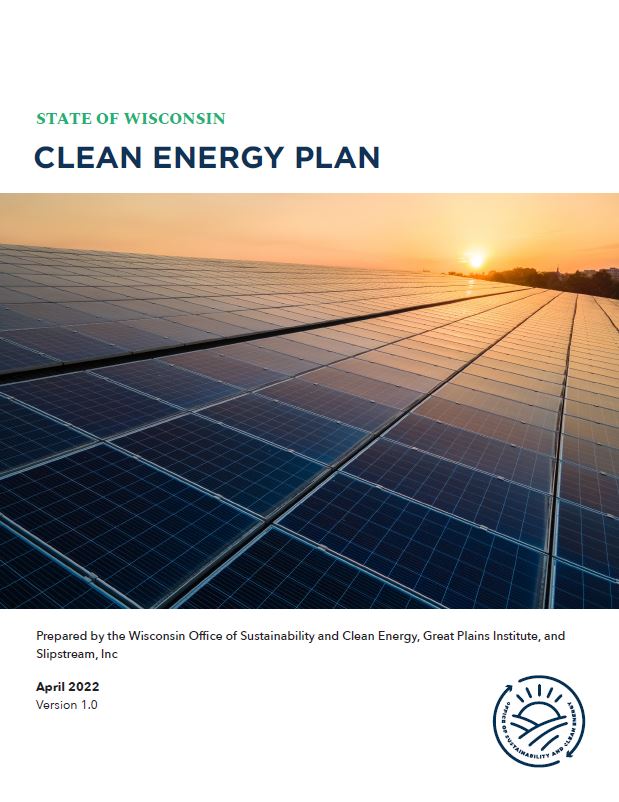
The Office released the state's Clean Energy Plan in April of 2022. This plan provides actions that directly address climate change, incorporate environmental justice, and ensure accelerated progress towards a strong clean energy economy. The CEP provides a roadmap that accomplishes Wisconsin’s objective of achieving a carbon-neutral power sector and reducing a range of other energy-related emissions. Since the release of the CEP, the Office has produced three subsequent annual progress reports.
Click here to learn more about the Clean Energy Plan and read the annual progress reports.
 Governor's Task Force on Climate Change Report
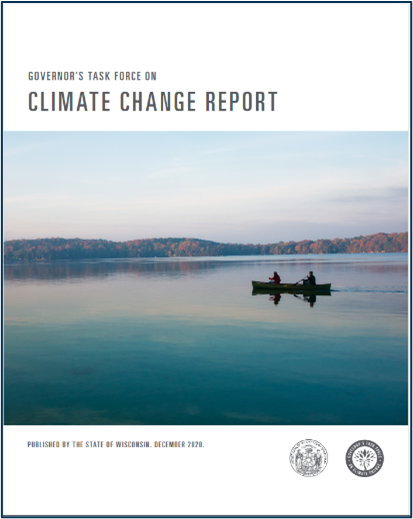
In October 2019, Governor Tony Evers signed Executive Order #52 establishing the Governor’s Task Force on Climate Change and directing it to "advise and assist the Governor in developing a strategy to mitigate and adapt to the effects of climate change for the benefit of all Wisconsin communities." In October 2020, that report was sent to the Governor's Office.
Click here to learn more about the Governor's Task Force on Climate Change Report.
Other State Planning
Since climate action can be seen as just rethinking how we currently engage in activities to make them more sustainable, it can help to understand how we plan around other industries and concepts. Below are a list of other state plans that the Office considers when developing plans.
Wisconsin Department of Natural Resources
Wisconsin Department of Transportation
Public Service Commission of Wisconsin
Other Government Planning
Like state governments, local governments and tribes can provide guidance, regulations, and incentives to catalyze climate action within their jurisdictions. In many ways, these actions can be more targeted to their communties' needs and may be more influential than state efforts.
Three groups received funding through the EPA's Climate Pollution Reduction Grant planning program and released comprehensive climate action plans (CCAPs). You can find links to these plans here.
As noted above, not all climate actions come in the form of climate plans. Climate actions can be found in local comprehensive plans (usually completed every 10-20 years), transportation plans, housing and other infrastructure plans, and the like. In 2024, the University of Wisconsin - Milwaukee's Office of Sustainability reviewed over 200 local plans to find what sustainability actions might lie therein. They documented these actions in a database for the OSCE, and we've made them available for you to peruse and filter on our Local Government Climate Action Plan Analysis page.
More resources exist to help communities develop their climate action strategies. Below you will find some helpful resources that the OSCE frequently refers communities to to help them get started on their sustainability journeys: